Disney Solitaire
- 4.8
- Rating
- 10.00M
- Installs
- Free
- Price

 Analysis by App-foxy
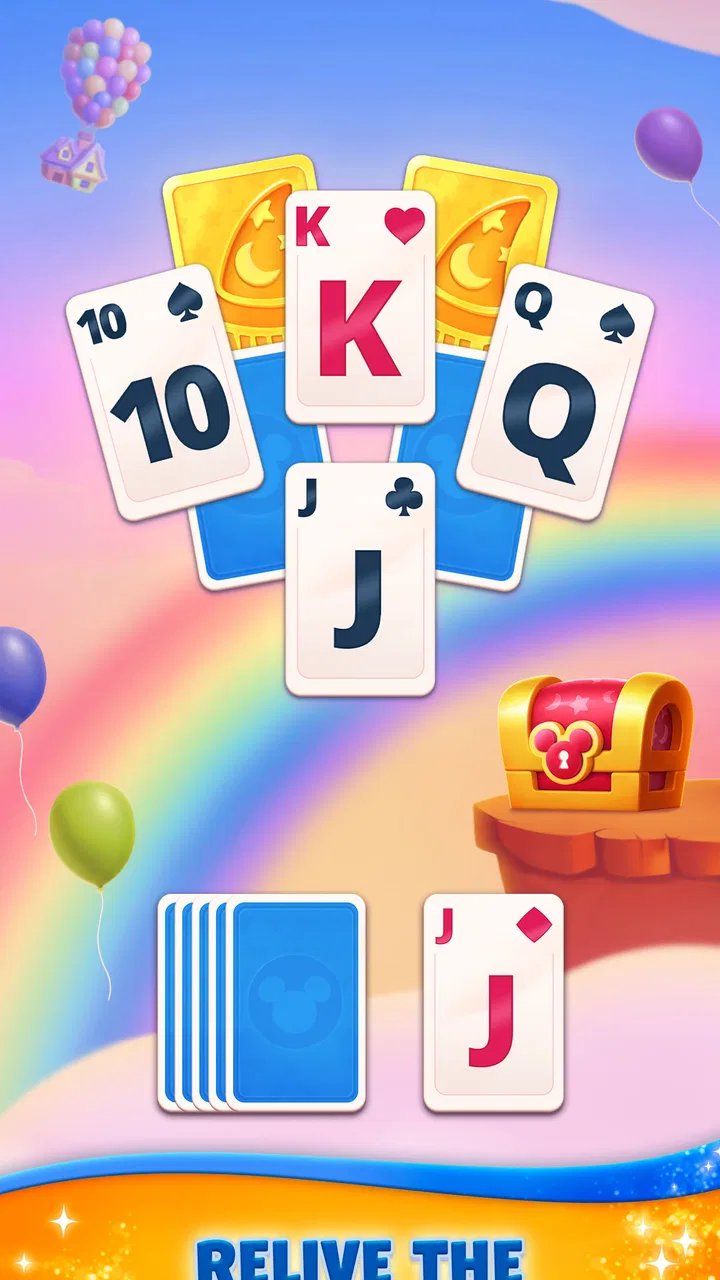
Disney Solitaire is the kind of card game I reach for when I want something familiar, calm, and easy to understand within a few seconds. It takes the classic solitaire format and places it inside a Disney-themed presentation, with card challenges and memories providing the reason to keep moving from one deal to the next. The basic idea is simple, but the presentation gives each short session more personality than a plain digital deck.
After spending time with it, my impression is that the game succeeds best as a gentle pick-up-and-play experience rather than as a deep strategy title. I can open it during a quiet break, play a few rounds without preparing anything, and stop without feeling that I have abandoned a complicated campaign. That convenience is its strongest everyday quality. At the same time, players looking for competitive depth, elaborate deck-building, or a completely distraction-free solitaire table may find the Disney layer more important than they would prefer.
Disney Solitaire is a free card game from SuperPlay, rated for Everyone. It is available for devices running Android 7.0 or later, and its current version is 1.11.1. The game has reached over five million installs, with an average rating of 4.8 from around 307 thousand ratings. Those figures suggest that its approachable format and recognizable setting have found a broad audience, although popularity alone does not make it the right fit for every solitaire player.
You May Also Like

 AccuWeather: Weather Radar
AccuWeather Review: A Quick, Clear Forecast for Everyday Decisions
For everyday plans, the best forecast is the one you can understand quickly. AccuWeather makes rain timing, radar, and local conditions easy to act on, with a few trade-offs.

 Hill Climb Racing
Why Hill Climb Racing Still Turns Crashes Into One More Run
A tiny car, a bumpy hill and one more upgrade: Hill Climb Racing keeps resurfacing because its simple chaos makes every near-miss feel personal.

 AliExpress - Shopping App
AliExpress Makes Global Shopping Feel Personal, but Shoppers Bear the Risk
AliExpress turns a global marketplace into a pocket-sized discovery engine. Its reach is useful, its shopping loop compelling, and its trade-offs easy to miss.

 Lords Mobile: Kingdom Wars
Lords Mobile Is a Kingdom-Building Routine, Not a Quick Match
A case-by-case verdict on the building, battles, device demands, and social commitments that make Lords Mobile rewarding for some players and exhausting for others.

 PDF Scanner app - TapScanner
TapScanner Makes Paperwork Easier to Capture, Check, and Share
TapScanner makes scanning with a phone feel less like a rescue operation and more like a dependable step in getting work done. Its capture tools are useful, though not flawless.

 Block Blast!
 Shows How Much a Puzzle Game Can Leave Out
A quiet grid game shows why puzzle players increasingly value instant clarity, repeatable skill and low-pressure play—and where the genre still needs to catch up.
More From Our News Desk
View All News


How the first few sessions feel
The opening appeal is immediate because the rules are already familiar to anyone who has played solitaire. You are not learning a complicated card battler, memorizing a large collection of abilities, or waiting through a long tutorial before the game becomes enjoyable. The central action remains arranging cards and making the next useful move, while the surrounding Disney identity gives those decisions a more inviting frame.
I think that balance matters on a phone. A traditional solitaire app can sometimes feel like a utility: useful, but visually forgettable. Here, the themed setting encourages me to treat each completed challenge as a small piece of a larger journey. The cards are still the focus, yet the game has a reason to make progress feel more personal than simply clearing another standard layout.
My first practical recommendation is to play the opening rounds slowly instead of tapping through them as quickly as possible. The game is designed around short decisions, but rushing can make a player overlook the order in which cards should be exposed. Once the layout becomes familiar, the pace naturally improves. This is especially useful for new players who know the broad idea of solitaire but are less comfortable planning several moves ahead.
The game also suits a very specific everyday scenario: a short wait at a bus stop, a few minutes before an appointment, or a quiet break after finishing a task. I can start a round without committing to a long session, make progress, and put the phone away when my time is up. That makes it more convenient than many larger mobile games, which often expect a longer uninterrupted visit.
There is a trade-off, though. A short-session design can make the experience feel repetitive if I play for a long stretch without a change of pace. The appeal comes from the combination of card decisions, visual rewards, and gradual progress, not from constantly changing rules. If you need a game that keeps introducing new mechanical surprises, this will probably feel too restrained.
A Disney setting that supports the card table
The art direction is not merely decoration placed around a generic solitaire board. The Disney identity gives the game a softer, more storybook-like mood, which changes how the familiar card format feels. Instead of presenting every round as an isolated puzzle, the presentation encourages me to see the challenges as steps toward unlocking memories.
That framing is effective because it gives the player a reason to care about completion beyond the satisfaction of an empty tableau. The cards remain readable and central, while the surrounding imagery makes the act of progressing feel warmer. I would not describe the game as visually demanding in the way a large action game is, but its strength lies in consistency: the setting, rewards, and card play are pointed in the same emotional direction.
One useful way to approach the presentation is to treat the memories as motivation rather than as the main attraction. If you already enjoy Disney worlds, the themed progression can make ordinary solitaire feel more inviting. If you mainly want the cleanest possible card interface, the extra layer may seem unnecessary. In that case, a minimalist solitaire app would likely serve you better because it removes the narrative and visual framing altogether.
The setting also helps younger or family-oriented players understand the purpose of continuing. The Everyone content rating makes the game broadly accessible, and the familiar characters and tone make it less intimidating than a competitive card game. Still, accessibility of theme should not be confused with simplicity of every decision. Solitaire can remain surprisingly tricky when a player commits to the wrong move early in a layout.
My most practical visual tip is to pause before moving a card simply because the move is available. Look first for the action that reveals a hidden card or opens a useful space. In a themed game, it is easy to focus on the cheerful presentation and play casually, but the strongest results still come from basic solitaire discipline: preserve options, expose information, and avoid closing off a column without a clear benefit.
Sound, rhythm, and the feeling of a complete round
The game’s mood depends on more than its artwork. Sound and pacing help turn a sequence of card movements into a small, coherent activity. The best moments are not dramatic; they are the steady rhythm of choosing a move, seeing the layout change, and approaching a completed challenge. That rhythm makes the game comfortable for players who prefer low-pressure entertainment.
I find this especially useful when I want something engaging but not emotionally demanding. The game does not ask me to react quickly to opponents or manage a complicated battlefield. Its natural tempo leaves room to think, and the Disney atmosphere keeps that thinking from feeling dry. The result is closer to a relaxing puzzle routine than to a high-intensity card match.
There is also a practical reason to appreciate this slower rhythm: it makes the game suitable for divided attention, within limits. I can play while taking a brief break, but I would not recommend treating it as background entertainment while doing something that requires concentration. A single missed card can affect the rest of a layout, and the relaxed mood should not encourage careless decisions.
For a longer session, I suggest using the game in small groups of rounds rather than expecting it to carry an entire evening. The pacing works well when each challenge feels like a compact stop on the way to another memory. After many consecutive rounds, the same basic cadence can lose some of its freshness. That is not a flaw unique to this title; it is a natural limitation of a focused solitaire structure, but the themed rewards can only partly offset it.
Players who usually mute mobile games should still be comfortable with the core experience because the card logic does not depend on constant audio attention. The atmosphere benefits from sound when available, but the important feedback comes from the layout and the result of each move. That makes the game flexible for quiet public places, provided the phone is used respectfully and notifications are not interrupting the session.
Why the Disney layer fits solitaire, and where it does not
Mechanically, the pairing makes sense. Solitaire already has a clear loop: inspect the cards, decide what can move, uncover more information, and work toward completion. Disney’s memory-focused progression adds a gentle sense of purpose without requiring the underlying card game to become something entirely different.
That is a strength for newcomers. Someone who wants a recognizable card game does not have to learn a new combat system just to enjoy the theme. The Disney setting supplies motivation while the solitaire rules provide structure. In my experience, this makes the game easier to recommend to a friend who wants a casual mobile game but does not enjoy fast reactions or complicated controls.
The limitation is that the core mechanics remain deliberately narrow. The game is not a replacement for a collectible card game, a head-to-head strategy title, or a traditional board-game adaptation with many different systems. If your enjoyment comes from building a custom deck, studying a large metagame, or outsmarting human opponents, you will probably outgrow this format quickly.
Compared with a standard solitaire app, this game offers more atmosphere and a stronger reason to continue. Compared with a competitive card game, it offers less variety in the moment and much less pressure. Compared with a puzzle game built around entirely new rules, it is easier to understand but may feel less inventive. I see that as a deliberate trade-off rather than a weakness: the game wants to make solitaire feel special, not reinvent card play.
The free entry point is helpful because it lets players test that trade-off without paying first. However, in-app purchases range from $0.99 to $149.99 per item, so I would approach the progression with a clear personal limit. The game is best enjoyed when purchases remain optional extras rather than a source of pressure. Anyone who dislikes seeing premium offers in a free-to-play game should consider that before settling in.
A useful habit is to decide in advance whether you are playing for the card challenge or for faster access to the themed progression. If the challenge itself is the priority, there is less reason to hurry. If collecting every available memory is your main goal, the pace and purchase prompts may matter more. Knowing which of those motivations is yours can prevent the game from feeling frustrating when it is simply following its chosen structure.
Who will enjoy it most
I would recommend this game to Disney fans who already enjoy solitaire, casual players who want a recognizable rule set, and people looking for a relaxed mobile activity that fits into short gaps in the day. It is also a reasonable choice for families seeking an approachable card game with a friendly visual identity and an Everyone rating.
It is particularly well suited to players who enjoy light progression. The memory concept gives completed challenges a sense of accumulation, so each round can feel connected to the next. That is more satisfying than a completely resettable solitaire table for players who like seeing a broader purpose behind individual games.
I would be more cautious about recommending it to someone who wants a pure, uncluttered solitaire experience. A dedicated classic solitaire app may be better if you care most about quick restarts, minimal presentation, and nothing competing with the cards. I would also point competitive players toward a multiplayer card game instead, because this title’s appeal is its calm solo rhythm rather than direct rivalry.
It may not be the best choice for someone who becomes annoyed by free-to-play progression or who expects every session to introduce new rules. The game’s charm depends on liking its atmosphere and accepting repetition as part of the format. Without that patience, the Disney presentation can feel like a layer around a familiar activity rather than a reason to keep playing.
Small habits that make the experience better
My first habit is to prioritize information. When several moves are possible, I usually favor the one that reveals a concealed card or creates more future choices. This approach is more reliable than moving cards merely because a legal placement is available, and it helps reduce the number of layouts that become awkward later.
Second, I treat the memory progression as a reason to finish thoughtfully, not as a timer. The game’s mood works best when I let the round breathe. Playing too aggressively can turn a relaxing card puzzle into a sequence of rushed taps, which undermines the atmosphere that makes this version appealing.
Third, I separate a bad round from a bad game. Solitaire layouts can become difficult because of the order in which information appears, and one unsuccessful attempt does not necessarily mean the overall design is unfair. Taking a short break and returning with a fresh view is often more useful than repeatedly forcing the same plan.
Finally, I would keep spending boundaries visible in my own mind. Because the game is free to start but includes individual purchases priced from $0.99 up to $149.99, deciding beforehand what, if anything, I am comfortable buying keeps the focus on the card play. That advice is especially important for younger players, where a parent or guardian should handle purchase decisions.
My atmosphere verdict
Disney Solitaire works because its art direction, sound, and pacing agree with the nature of solitaire. The game does not try to make a quiet card puzzle loud or competitive. Instead, it gives familiar decisions a warmer setting and connects completed challenges to a collection of Disney memories. That coherence is its main achievement.
My final view is positive, with a clear condition: enjoy it as a themed casual solitaire game, not as a deep strategy platform. The free price makes it easy to try, the Everyone rating broadens its audience, and its established reception shows that many players appreciate the formula. Yet the in-app purchase range and repeated card structure mean it rewards self-control and realistic expectations.
For me, the best use is a short, comfortable session when I want a little focus without pressure. I would choose it over a bare solitaire utility when I want atmosphere, and over a competitive card game when I want to unwind. I would skip it in favor of a minimalist alternative if I wanted nothing but cards and speed. Within its intended space, though, SuperPlay has created a pleasant Disney-flavored card experience whose mood supports the mechanics instead of distracting from them.
FAQs for Disney Solitaire
01What is Disney Solitaire and how does it differ from traditional solitaire games?
Disney Solitaire is a themed version of the classic card game that incorporates beloved Disney characters and environments. Unlike traditional solitaire, this app offers unique levels and challenges inspired by Disney stories, adding a layer of nostalgia and fun for fans of all ages.
02Is Disney Solitaire suitable for children, and does it feature in-app purchases?
Disney Solitaire is designed to be family-friendly, making it suitable for children. However, parents should be aware that the game includes in-app purchases for additional themes, power-ups, and skips. It’s advisable to set up parental controls to prevent unauthorized purchases.
03What platforms is Disney Solitaire available on, and how do I download it?
Disney Solitaire is available for download on both Android and iOS platforms. You can find it on the Google Play Store for Android devices and the Apple App Store for iOS devices. Simply search for 'Disney Solitaire' and follow the installation instructions.
04Does Disney Solitaire require an internet connection to play?
While Disney Solitaire can be played offline, certain features such as updates, leaderboards, and special events require an internet connection. Playing offline will limit access to some interactive elements and updates, but the core game remains fully functional.
05Are there any special features or modes in Disney Solitaire that enhance gameplay?
Yes, Disney Solitaire offers several special features, including themed card decks, character-specific power-ups, and unique challenges for each Disney world. These elements provide variety and keep gameplay engaging, allowing players to explore different strategies and enjoy the magical Disney experience.
Pros
- Beautiful Disney-themed graphics
- Smooth and intuitive gameplay
- Various levels and challenges
- Daily rewards and bonuses
- Offline play available
Cons
- Contains in-app purchases
- Ads can be intrusive
- Limited customization options
- Occasional performance lags
- Requires frequent updates

Disney Solitaire
Gallery